
20 free minutes to find out whether we can helpBook my free first conversation

Case studies

When a clear case file helps move matters forward and avoids wasted time

Three anonymised real situations and one fictitious example showing how organising facts and documents can support decisions and discussions with the professionals involved.

01

An orderly reading of the facts and documents, to make the claim understandable

The facts and documents were sorted and linked so the claim could be read and reviewed.

Initial situation

Following a dismissal, a person had been unable to obtain the compensation they were claiming. The accumulation of events and documents made their position difficult to present clearly.

Our work

Resoluxionpro reconstructed the timeline, organised correspondence and supporting documents, separated the different aspects of the case and prepared the points to review with the relevant professionals.

What was delivered

The case file delivered presented the compensation claim in a clear, documented way, ready to be reviewed with the relevant professionals.

Every situation is unique. This account describes an individual experience and does not constitute a guarantee of any outcome.
02

Refocusing the case on the points to review

Organising the facts and documents refocused the case on the questions to review with qualified professionals.

Initial situation

In a dispute concerning rented property, the positions of the stakeholders had hardened and several courses of action were being considered without a shared understanding of each party’s obligations.

Our work

Resoluxionpro brought together the available facts and documents, then prepared a factual summary and a list of questions for qualified professionals.

What was delivered

The structured presentation served as a basis for identifying, with qualified professionals, the points genuinely to be reviewed.

Every situation is unique. This account describes an individual experience and does not constitute a guarantee of any outcome.

03

A clear timeline to better understand the facts

Organising and summarising the events turned a scattered file into a straightforward reading of the facts.

Initial situation

A complex case contained numerous exchanges, events and documents with no immediately understandable order. Each new professional had to review everything before identifying the essential facts.

Our work

Resoluxionpro sorted the documents, linked each event to its source and produced a timeline with a summary of established, disputed and outstanding facts.

What was delivered

The client and the professionals consulted had a simple, orderly reading of the events to prepare their discussions.

Every situation is unique. This account describes an individual experience and does not constitute a guarantee of any outcome.

04

Fictitious example

A shop wrecked during a demonstration: a summary, then a list of steps to follow

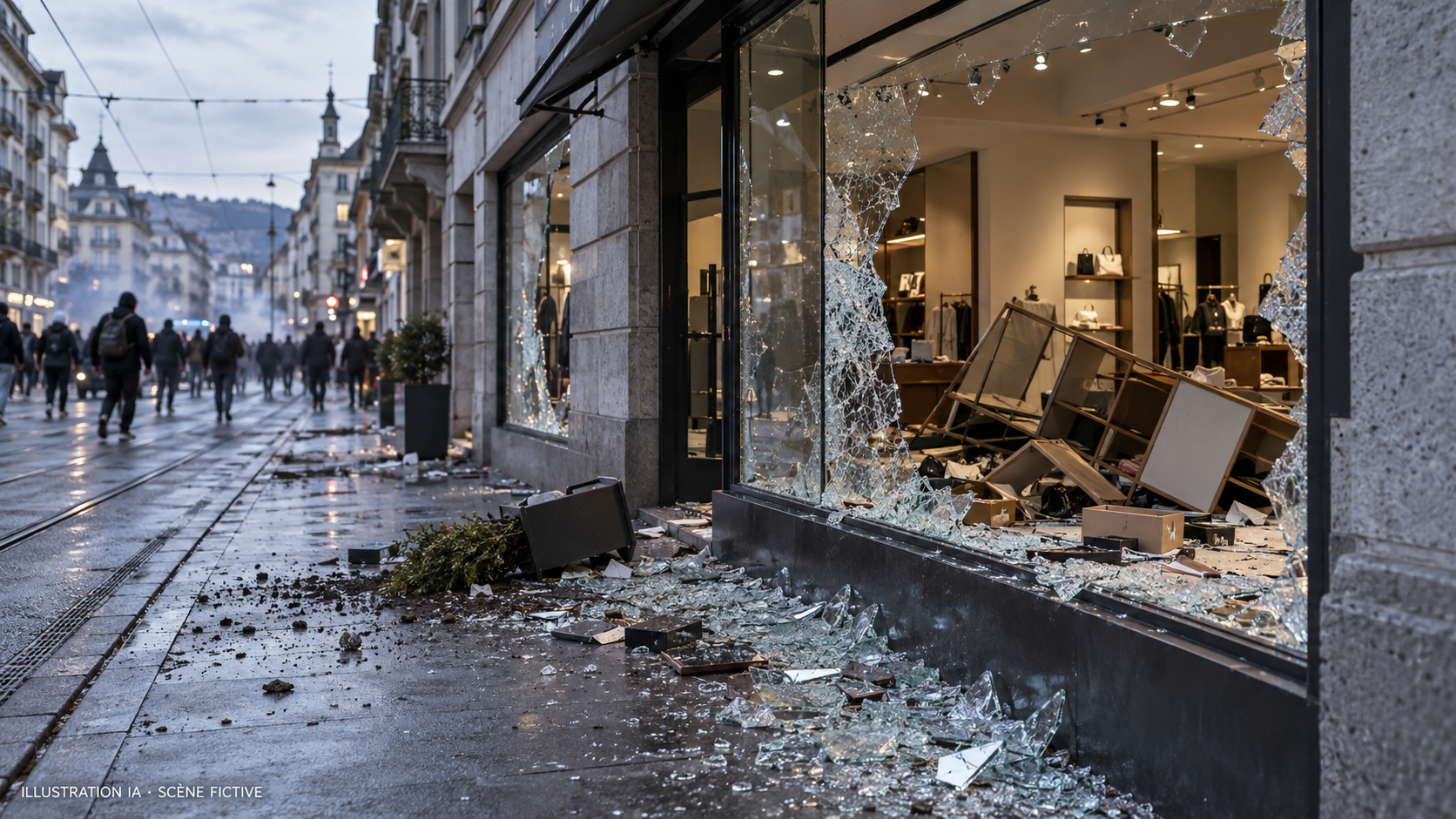
A rented shop in Lausanne is completely vandalised during a demonstration. A fictitious example: the case summary, then the list of steps, one contact at a time.

Smashed shop window, broken glass on the pavement and an overturned display unit inside the store
AI-generated illustration · fictitious scene

Imagined situation

A rented shop in Lausanne is completely vandalised during a demonstration: goods worth CHF 50'000.- stolen, fittings and decorations worth CHF 30'000.- wrecked, the window smashed — CHF 80'000.- of property affected. After the shock, the police, the landlord, the insurers and the restart of the business all have to be handled at the same time.

Summary

Property affected and each party’s role

The operator owns the stolen goods and the fittings, layouts and decorations specific to the business. The landlord remains owner of the property elements: window, façade, entrance door and load-bearing structures.

Business insurance

Policies, terms and evidence of the damage are gathered so insurers can confirm the applicable cover, exclusions and steps. Any business interruption cover must also be checked against the policy taken out.

Premises and rent

The lease, photographs and correspondence with the landlord document the condition of the premises and periods when they could not be used. Questions about repairs, rent and responsibilities are for qualified professionals to review.

Building and window

Damaged items, estimates and correspondence are grouped to prepare discussions with the landlord and insurers. Responsibilities and cover applicable in Vaud must be confirmed by the competent contacts.

Recourse and third-party liability

The thefts, damage and amounts involved are documented. Filing a criminal complaint and bringing a civil action or claim are distinct steps, to review with the competent authorities or professionals while taking account of deadlines.

Steps to follow: the documents to prepare

Once the summary is in place, the rest is prepared document by document. Here is the list to build, group by group.

  1. 01 · In the first few days

    • Inform the landlord without delay about the damage to the building.
    • Secure the window temporarily (fit a chipboard panel) to limit further damage or theft.
    • Prepare the timeline and documents for discussions with the police; retain confirmation of any criminal complaint filed, where applicable, for the insurers.
  2. 02 · Documents for the police

    • Descriptive inventory of the thefts and damage: stolen items with descriptions (brands, models, serial numbers) and destroyed equipment.
    • File proving value: original purchase invoices, order forms or accounting records showing the value of the goods (CHF 50'000.-) and of the fittings (CHF 30'000.-).
    • Photo file: pictures of the premises immediately after the damage (window, forced locks, empty shelves, debris).
    • Proof of business: extract from the Commercial Register and the commercial lease proving your right to the premises.
  3. 03 · Documents for the landlord and the property manager

    • History of correspondence and reports of damage sent to the landlord.
    • Lease, periods when the premises could not be used and questions about repairs or rent for review by a qualified professional.
    • Copy of the police confirmation of any criminal complaint filed, where applicable.
    • Photographs focused on the building structures and the window.
  4. 04 · Documents for the contents and inventory insurance

    • Official notice-of-claim form from your insurance company, completed and signed.
    • Original certificate of the criminal complaint.
    • Detailed statement of the damage: goods section (quantities, purchase prices excluding VAT, total value) and fittings and decorations section (restoration quotes or replacement invoices).
    • Invoices for emergency measures: panel fitted over the window, temporary locksmith work.
  5. 05 · Documents for business interruption insurance, if taken out

    • Certificate of forced closure stating the date of the damage and the estimated length of the closure.
    • Balance sheets and income statements for the last two financial years, and turnover for the same months in previous years.
    • Statement of fixed costs to be maintained: rent, staff wages, subscriptions and unavoidable charges.
  6. 06 · Documents for internal follow-up

    • Damage dashboard: emergency expenses, quotes committed and compensation received.
    • Record of the hours spent by you or your staff on cleaning, tidying and stocktaking.

Fictitious example, with no real case file and no client involved. The amounts are working assumptions and the avenues mentioned must be confirmed by the insurers, the landlord and the qualified professionals. This content is not legal advice: consult your lawyer or another qualified professional if the situation requires it, and act within the deadlines.

The first three cases are real and anonymised; the fourth is a fictitious example built to show a summary followed by a list of steps. Every situation depends on its facts, documents and the professionals involved. These examples do not guarantee any outcome.

Testimonials

What clarity brought our clients

Clients describe how clarifying their case file helped move their situation forward.

CB
A compensation file put in order after more than a year of efforts
For over twelve months, I tried to obtain compensation I was entitled to, but which was being disputed. Despite numerous exchanges of correspondence, the situation remained deadlocked. An important deadline was approaching and I no longer knew how to move my case forward. I then turned to Resoluxionpro. Resoluxionpro organised my documents, reconstructed the timeline and prepared a clear presentation of my claim. After more than a year of exchanges, finally having a readable case file was a real relief.

Every situation is unique. This account describes an individual experience and does not constitute a guarantee of any outcome.

XR
Clarifying my position to move forward in mediation
A complaint had been filed against me. I had documents to explain my situation, but I needed help analysing them and identifying the relevant arguments. Resoluxionpro helped me put the facts in perspective, clarify my position and prepare my arguments for the mediation. I was thus able to approach the mediation with a sharper, better documented view of my case.

Every situation is unique. This account describes an individual experience and does not constitute a guarantee of any outcome.

JP
A structured case file after a dismissal
Following an unfair dismissal, I needed help presenting my situation and preparing the necessary steps. Resoluxionpro’s involvement helped me clarify my case and better structure my approach. In that difficult period, having a clear case file and concrete support was invaluable.

Every situation is unique. This account describes an individual experience and does not constitute a guarantee of any outcome.

A first step, without sensitive documents

Let’s start by clarifying your situation

Present my situation